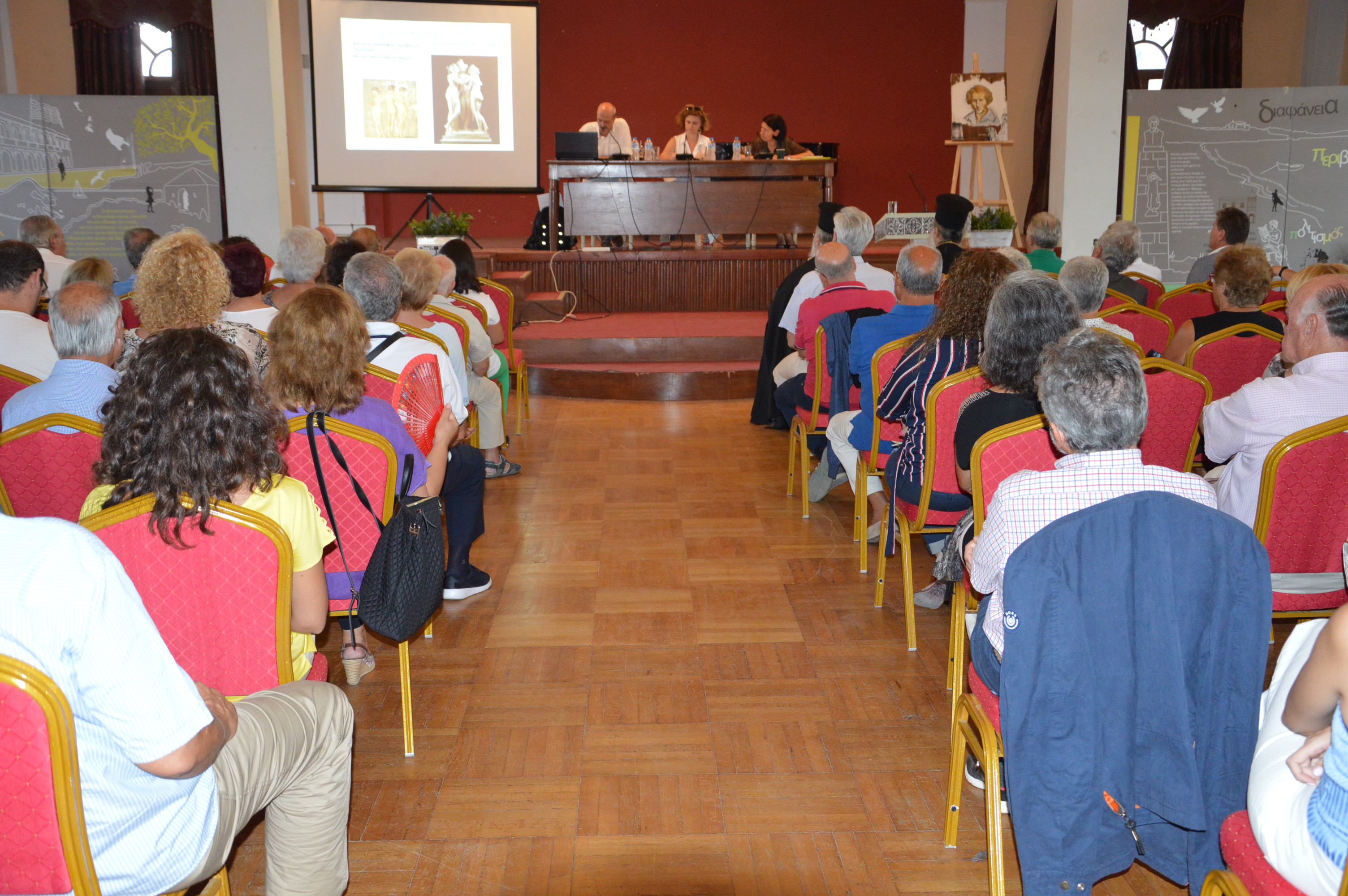
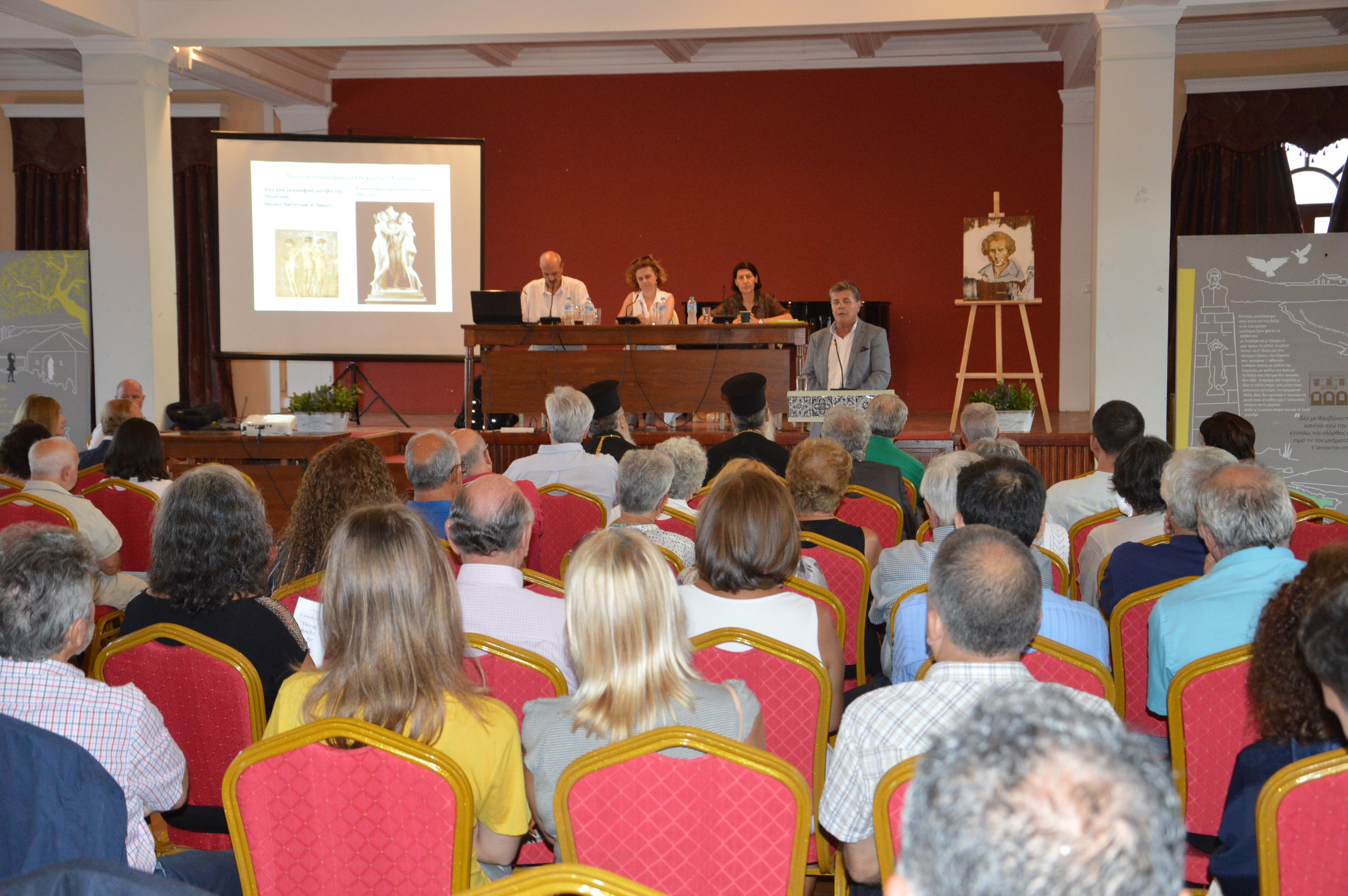
On Sunday 9 September 2018 the two-day events in honour of the Greco-Italian poet Nikolaos Ugo Foscolo, who was born in Zakynthos in 1778 and died in London on 10 September 1827, a leading figure of Italian and European letters, came to a close.
During the meeting the speakers analysed the newer and more contemporary perspectives on his deeply philosophical, poetic and literary work. The event was greeted by the Ambassador of the Italian Republic.
Professor of Philology at the University of Pisa Francesca Fedi presented the poet’s works “The Sepulchres” and “The Graces” and highlighted the poet’s reflections on the idea of the nation under the weight of the great contrasts and confrontations of the age in which the works were written, concerning the creation of the new Italian state.
Professor Fani Kazantzi of Aristotle University of Thessaloniki spoke of the vast translational endeavour that took place in the Ionian Islands and Greece, from the early nineteenth century to the present day, on the poet’s work “The Sepulchres” and of the prevailing views regarding fidelity of wording and density of meaning. The significant differences in syllabification between Greek and Italian influenced the various scholars and translators of Foscolo’s works, and few succeeded in combining these two essential requirements so as to render this important work of the poet in Greek with fidelity and completeness.
The historian Dimitris Arvanitakis spoke of the poet’s major novel “The Last Letters of Jacopo Ortis” and, under the title “The forms of romantic love”, brought out the tragic impasses of the work’s protagonist in an age when the visions of an Italy liberated by Napoleon began to collapse and a personal love of his was far removed from any optimistic prospect, leading him ultimately to suicide.
The idealism of the age, love of homeland, affection for the heroes who fought, and the harsh reality he experiences around him drive him to an anguished search for a place and space of self-destruction that will come after the definitive end of his love for the woman who inspired him.
With regard to this work of the poet, the speaker conveyed the historical depth of the nineteenth-century struggles for the democracy of a united Italy through the thought and anguish of the protagonist, who experiences betrayal in both forms of this romantic love.
During the two-day events the house in which the poet was born in Zakynthos was opened to the public for the first time, and through an exhibition of rare editions of the poet from the eighteenth and nineteenth centuries visitors experienced the atmosphere of a popular house of the century before last.
<li>Francesca Fedi, Professor of Philology at the University of Pisa, “The Sepulchres and the Graces: Foscolo and the image of the nation”.</li> <li>Fani Kazantzi, Emeritus Professor of Aristotle University of Thessaloniki, “The Sepulchres: translational approaches from the Greek period”.</li> <li>Dimitris Arvanitakis, Historian, Director of Publications of the Benaki Museum, “Last Letters of…”</li>